
September 20, 2026
High Temperature Silicone Wire Specifications – Temperature Rating, Voltage, and AWG Explained
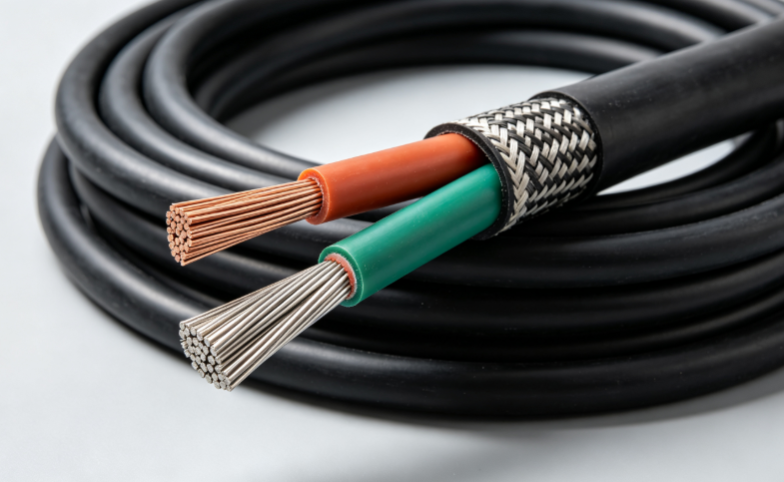
Table of Contents
Introduction
Temperature Rating – The Defining Specification
Voltage Rating – AC and DC Considerations
AWG – Understanding Wire Gauge and Current Capacity
Insulation Materials and Construction
Key UL Styles and Their Specifications
Conclusion
Frequently Asked Questions (FAQ)
1. Introduction
High temperature silicone wire has become the default choice for applications where standard PVC-insulated wire simply cannot survive. From robotics and 3D printers to automotive engine bays, industrial ovens, and aerospace systems, silicone wire delivers reliable performance across a temperature range that would melt or embrittle conventional insulation.
What sets silicone wire apart is its silicone rubber insulation. Unlike PVC, which softens, melts, or becomes brittle under extreme temperatures, silicone maintains its flexibility, dielectric strength, and mechanical integrity from -60°C all the way up to +200°C. This exceptional thermal stability, combined with excellent electrical properties and chemical resistance, makes silicone wire the go-to solution for demanding environments.
But not all silicone wire is the same. The specifications that define its performance—temperature rating, voltage rating, and AWG (American Wire Gauge)—determine whether a particular wire is suitable for your application. This guide explains each of these specifications in detail.
2. Temperature Rating – The Defining Specification
The temperature rating is the most important specification for high temperature silicone wire. It determines the maximum continuous operating temperature the wire can withstand without degrading its insulation or mechanical properties.
Standard Temperature Range
The typical operating temperature range for silicone wire is -60°C to +200°C. This is the industry standard for most high-temperature silicone wire products. Some variants offer extended ranges: UL3122, for example, is rated from -60°C to +200°C, while some specialty silicone wires can withstand up to 250°C for short periods.
The 150°C vs. 200°C Distinction
Not all silicone wires are rated to 200°C. Some are rated at 150°C, and the difference matters.
At 150°C, silicone wire's physical and mechanical properties are essentially unaffected. The wire can be used almost permanently at this temperature without performance degradation. At 200°C, the wire can operate continuously for more than 10,000 hours. This is roughly equivalent to over one year of continuous operation.
The choice between 150°C and 200°C ratings depends on the application's maximum operating temperature and expected service life. For critical applications with prolonged high-temperature exposure, the 200°C rating provides a significant margin of safety.
Short-Term Temperature Peaks
Many silicone wires can withstand short-term temperature excursions above their continuous rating. UL3122, for instance, can withstand peaks up to 230°C for brief periods. Some products claim short-term resistance up to 250°Cor even 260°C for up to one hour. However, continuous operation should always stay within the rated temperature range.
Low-Temperature Performance
Silicone wire excels at low temperatures as well. The -60°C rating means the wire remains flexible and functional even in extreme cold—a critical advantage for outdoor robotics, cold storage, and aerospace applications. PVC-insulated wire typically becomes brittle and cracks at these temperatures.
3. Voltage Rating – AC and DC Considerations
The voltage rating specifies the maximum voltage the wire can safely handle. High temperature silicone wire is available in several voltage ratings, from 300V up to 1000V and beyond.
Standard Voltage Ratings
Most common silicone wire products are rated at 600V AC / 3kV DC. This dual rating—600V AC and 3kV DC—reflects the different dielectric requirements of AC and DC systems. The DC rating is typically higher because DC does not create the same capacitive and inductive effects as AC.
Some products are rated at 300V, typically those with thinner insulation or fiberglass braid construction. UL3122, for example, has a nominal voltage rating of 300V.
Higher voltage ratings are also available. UL3512 cables are rated at 600V under UL/CSA standards and 1000V under VDE standards. Some UL4476 silicone rubber cables are available in 300V, 600V, and 1000V ratings.
DC vs. AC Ratings
The dual rating system is important to understand. A wire rated AC600V/DC3kV can handle 600V AC or 3,000V DC. The much higher DC rating is possible because DC voltage does not subject the insulation to the same alternating stress as AC.
When selecting wire, always verify both the AC and DC ratings if your application uses DC power. Many high-temperature silicone wires are specifically designed for DC applications in robotics, electric vehicles, and battery systems.
4. AWG – Understanding Wire Gauge and Current Capacity
AWG (American Wire Gauge) is a standardized system for specifying wire diameter. Lower AWG numbers mean thicker wire, which can carry more current.
AWG and Cross-Sectional Area
AWG | Approx. mm² | Typical Current Capacity (Silicone) |
4 AWG | 21.2 mm² | 250A |
6 AWG | 13.3 mm² | 70A |
8 AWG | 10.0 mm² | 190A |
10 AWG | 5.26 mm² | — |
12 AWG | 3.31 mm² | — |
14 AWG | 2.08 mm² | 20A |
16 AWG | 1.50 mm² | 35A |
18 AWG | 0.75 mm² | 22A |
20 AWG | 0.52 mm² | 9.0A |
22 AWG | 0.33 mm² | 7.0A |
24 AWG | 0.21 mm² | 5.0A |
Data compiled from multiple manufacturer specifications
The table above shows typical current capacities for silicone wire at 200°C. However, these values vary by manufacturer, conductor construction (solid vs. stranded), and the number of strands.
The "Rule of Thumb" for Silicone Wire Ampacity
A commonly used rule of thumb for silicone wire is: take the cross-sectional area in mm², multiply by 25, and that gives a reasonable current capacity in amps.
For example:
0.5 mm² × 25 = 12.5A (approximately 12A)
1.5 mm² × 25 = 37.5A (approximately 35A, which matches the 35A rating for 16AWG silicone wire)
10 mm² × 25 = 250A (approximately 190–250A, matching the 190A rating for 8AWG)
This rule is approximate. Actual ampacity depends on ambient temperature, installation conditions, and the specific wire construction.
Conductor Construction
High-temperature silicone wire typically uses stranded tinned copper conductors. The strands are fine—often 0.08mm diameter—which provides excellent flexibility. A 4AWG wire, for example, may use 5,000 strands of 0.08mm tinned copper.
Stranded conductors offer several advantages:
Flexibility: The wire bends easily, crucial for robotics and motion systems
Fatigue resistance: Stranded wire withstands repeated bending without breaking
Oxidation resistance: Tinning protects the copper from corrosion
5. Insulation Materials and Construction
The insulation is what gives silicone wire its high-temperature performance.
Silicone Rubber Insulation
The primary insulation material is silicone rubber. It provides:
Thermal stability: -60°C to +200°C continuous operation
Dielectric strength: High voltage breakdown resistance
Flexibility: Remains pliable even at extreme temperatures
Chemical resistance: Resists acids, alkalis, oils, and oxidants
Fiberglass Braid (Optional)
Some silicone wires, particularly UL3122, add a fiberglass braid over the silicone insulation. This braid provides:
Abrasion resistance: Protects against mechanical wear
Additional thermal protection: The fiberglass helps contain the silicone
Flame resistance: Improves fire safety characteristics
Insulation Thickness
The insulation thickness affects both the voltage rating and the wire's outer diameter. Thicker insulation typically provides higher voltage ratings but increases the wire's size. UL3122, for example, uses 0.40mm insulation thickness for most AWG sizes.
6. Key UL Styles and Their Specifications
Several UL styles are commonly used for high-temperature silicone wire. Each has slightly different specifications.
UL Style | Temperature | Voltage | Construction | Typical AWG Range |
UL3122 | -60°C to +200°C | 300V | Silicone + fiberglass braid | 26–16 AWG |
UL3135 | -60°C to +200°C | 600V | Silicone (fiberglass braid optional) | 26–12 AWG |
UL3512 | Up to 200°C | 600V / 1000V | Silicone | 22 AWG – 500 kcmil |
UL4476 | 150°C or 200°C | 300V / 600V / 1000V | Silicone (multi-core available) | 2×26 – 5×14 AWG |
UL3530 | 150°C or 200°C | 600V | Silicone | Varies |
Data compiled from multiple sources
UL3122 is a widely used 300V silicone wire with a fiberglass braid. It is suitable for internal wiring of appliances, lighting fixtures, and electronic equipment. The fiberglass braid provides abrasion resistance and additional mechanical protection.
UL3135 offers a 600V rating and is available with or without fiberglass braid. It provides the same -60°C to +200°C temperature range as UL3122 but with higher voltage capability.
UL3512 is a 600V (UL/CSA) / 1000V (VDE) silicone wire available in a wide range of conductor sizes—from 22 AWG up to 500 kcmil. It is halogen-free and flame retardant.
UL4476 is a multi-core silicone cable available in multiple voltage ratings (300V, 600V, and 1000V) and temperature ratings (150°C and 200°C).
7. Conclusion
High-temperature silicone wire is defined by three core specifications: temperature rating, voltage rating, and AWG. The temperature rating—typically -60°C to +200°C—determines the thermal environment the wire can survive. The voltage rating—300V, 600V, or higher—determines the electrical stress the insulation can withstand. The AWG determines the wire's current-carrying capacity, with lower AWG numbers handling higher currents.
Silicone wire's silicone rubber insulation provides exceptional thermal stability, flexibility, and chemical resistance. The addition of a fiberglass braid (as in UL3122) adds abrasion resistance and mechanical protection. And the stranded tinned copper conductor ensures flexibility and corrosion resistance.
When selecting high-temperature silicone wire, match the specifications to your application's requirements. Consider the maximum operating temperature, the system voltage, and the current load. And always verify the specific UL style and manufacturer's datasheet for the exact specifications.
8. Frequently Asked Questions (FAQ)
Q: What is the typical temperature range for high-temperature silicone wire?
A: The standard temperature range is -60°C to +200°C. Some products can withstand short-term peaks up to 230°C or 250°C.
Q: What voltage ratings are available for silicone wire?
A: Common ratings include 300V, 600V, and 1000V. Many wires have dual ratings such as AC600V / DC3kV.
Q: What does AWG mean and why does it matter?
A: AWG stands for American Wire Gauge. Lower numbers mean thicker wire, which can carry more current. AWG determines the wire's ampacity and is critical for proper circuit design.
Q: What is the difference between UL3122 and UL3135?
A: UL3122 is rated at 300V with a fiberglass braid. UL3135 is rated at 600V and is available with or without a fiberglass braid. Both have the same -60°C to +200°C temperature range.
Q: Can silicone wire be used at temperatures above 200°C?
A: Silicone wire can withstand short-term temperature peaks above 200°C—up to 230°C or 250°C for brief periods. For continuous operation, stay within the rated temperature of 200°C.
Q: Why is silicone wire more expensive than PVC wire?
A: Silicone rubber insulation offers superior thermal stability, flexibility, and chemical resistance compared to PVC. The material costs more and the manufacturing process is more complex, which results in a higher price.
Q: How do I calculate the current capacity of a silicone wire?
A: A rule of thumb is to multiply the cross-sectional area in mm² by 25 to get a reasonable current capacity in amps. Always verify with the manufacturer's datasheet for your specific wire.