
October 14, 2026
Specialty Cable: Types, Key Specs and Industrial Applications
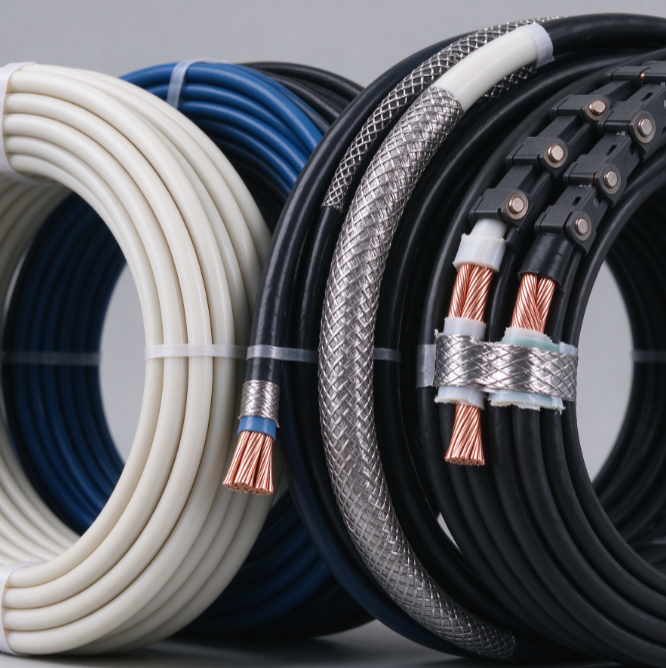
Table of Contents
1. What Is a Specialty Cable
2. Common Specialty Cable Types
3. Performance Specification Comparison Table
4. Core Features of Industrial Specialty Cables
5. Typical Application Environments
6. Frequently Asked Questions
1. What Is a Specialty Cable
Specialty cable is a custom wire solution. It differs from standard general-purpose cables.
It designs for harsh working conditions and specialized industrial equipment. Standard cables cannot meet these strict operating requirements.
Specialty wire and cable products focus on temperature resistance, corrosion resistance and structural stability. They keep stable electrical performance in extreme environments.
Most specialty cables follow strict industry certification standards. They support long-term continuous operation without failure.
2. Common Specialty Cable Types
2.1 High Temperature Specialty Cable
High temperature cable uses special insulation materials like PTFE and silicone.
It works stably under extreme heat. It does not melt or lose conductive performance easily.
This cable type widely uses in industrial furnaces, steel plants and engine bay equipment.
2.2 Shielded Specialty Cable
Shielded cable adds metal shielding layers outside the internal conductors.
It blocks electromagnetic interference effectively. It protects weak signal transmission.
It is the main choice for precision automation and communication devices.
2.3 Marine & Submersible Specialty Cable
Marine cable has anti-corrosion and waterproof structure. It resists salt water erosion and UV exposure.
Submersible cable supports long-term underwater operation. It keeps tight sealing performance under water pressure.
2.4 Flexible Drag Chain Cable
Drag chain cable is a flexible specialty cable. It adapts frequent bending and moving mechanical actions.
It has strong anti-fatigue ability. It fits automated production line motion systems.
3. Performance Specification Comparison Table
Different specialty cables have big differences in temperature resistance, flexibility and application limits. The below table shows verified industry standard performance data for mainstream models.
Cable Type | Working Temperature Range | Anti-Interference Ability | Bending Durability | Core Application |
PTFE High Temperature Cable | -60°C to 260°C | Strong | Medium | Aerospace, high-temperature industrial equipment |
Silicone High Temp Cable | -40°C to 200°C | General | Excellent | Automotive engine bays, electrical appliances |
Shielded Signal Cable | -20°C to 105°C | Excellent | Medium | Precision instrumentation, communication systems |
Drag Chain Flexible Cable | -30°C to 90°C | General | Superior | Automated machinery, robotic equipment |
PTFE specialty cable has the highest temperature resistance. It works in the harshest high-heat scenarios.
Drag chain cable focus on bending resistance. It can withstand millions of repeated bending cycles.
Shielded cable is the best choice for weak signal transmission. It avoid data distortion from external EMI.
4. Core Features of Industrial Specialty Cables
4.1 Customized Structural Design
Specialty cable can adjust insulation thickness, conductor size and shielding structure.
It matches different equipment installation spaces and power demands.
4.2 Superior Environmental Adaptability
Standard cables fail in extreme high temperature, low temperature or corrosive environments.
Specialty wire keeps stable electrical conductivity and insulation performance in these harsh conditions.
4.3 High Safety Performance
Most industrial specialty cables use flame-retardant materials.
They do not spread flame easily. They release less toxic smoke during high-temperature burning.
5. Typical Application Environments
5.1 Industrial Automation
Flexible drag chain cables and shielded signal cables support robotic arms and conveyor systems.
They ensure stable power supply and accurate signal transmission during frequent mechanical movement.
5.2 Automotive and New Energy Industry
High temperature specialty cables layout in vehicle engine bays and battery modules.
They resist long-term high heat and vibration to guarantee driving safety.
5.3 Marine and Aerospace Fields
Marine specialty cables adapt salt spray and humid marine environments.
Lightweight high-temperature cables apply to aerospace precision equipment.
6. Frequently Asked Questions
Q1: What makes specialty cable different from ordinary cable?
A1: Ordinary cables only fit normal indoor environments. Specialty cable uses professional insulation and shielding structures. It supports extreme temperature, corrosion and frequent bending working conditions.
Q2: Which specialty cable suits high-temperature industrial scenes?
A2: PTFE insulated specialty cable is the top option. It can run continuously at 260°C, much higher than silicone and PVC cable limits.
Q3: Do shielded specialty cables improve signal stability?
A3: Yes. The metal shielding layer block external electromagnetic interference. It stop signal loss and data error in precision equipment.
Q4: Is drag chain cable durable for long-term motion use?
A4: Yes. This flexible specialty cable is specially designed for repeated bending. It has far longer service life than common wires in dynamic equipment.