
October 14, 2026
High Temperature Silicone Wire: Specifications, Types and Industrial Uses
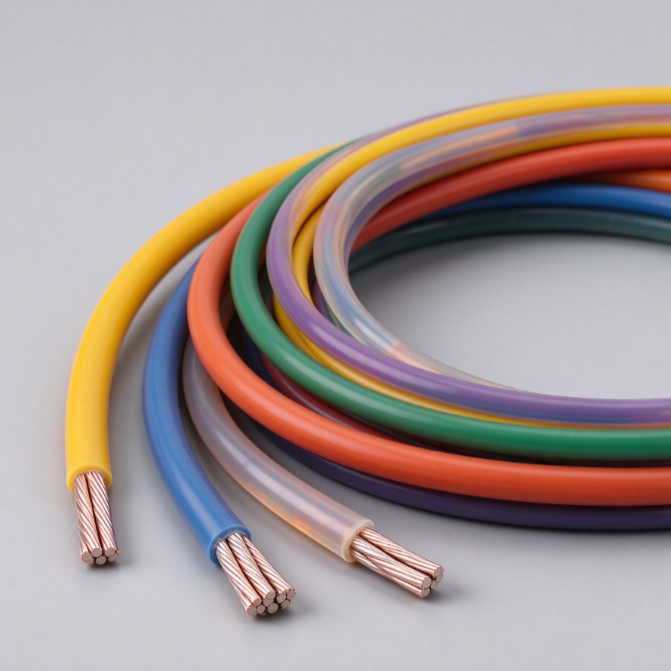
Table of Contents
1. Introduction
2. Core Technical Specifications
3. Insulation Material Performance Comparison
4. Common High Temperature Silicone Wire Types
5. Key Functional Advantages
6. Main Industrial Applications
7. Practical Selection Rules
8. Industry FAQ
Introduction
Industrial electrical equipment often works in high-heat environments. Standard wiring cannot resist continuous high temperature, and it will age or melt fast.
High temperature silicone wire is a special electrical wire built for harsh thermal conditions. It uses pure silicone rubber as the main insulation layer.
This wire support stable electrical performance under extreme temperature changes. It solves common failure problems of ordinary PVC and rubber wires.
Flexible structure and strong thermal resistance make it widely used in industrial machinery, household appliances and new energy equipment wiring.
Core Technical Specifications
Temperature and Voltage Rating
Standard high temperature silicone wire has a continuous working temperature range from -60°C to 180°C. Upgraded models can reach 200°C for long-term operation.
Most commercial products hold 600V rated voltage. It meet low and medium voltage circuit wiring demands for most industrial devices.
Basic Structural Parameters
Conductor adopts multi-strand tinned copper wire. The structure improve flexibility and anti-oxidation ability.
Insulation thickness changes with wire gauge. Common 1.5mm² wire has 0.6 to 0.7mm insulation thickness for stable protection.
The minimum bending radius is only 3 to 4 times the outer diameter. It is easier for narrow space wiring installation.
Insulation Material Performance Comparison
Different wire insulation materials show huge gaps in heat resistance and service life. The table below lists verified industry test data for mainstream wiring materials.
Performance Item | High Temperature Silicone Wire | PVC Insulated Wire | XLPE Insulated Wire |
Continuous Temp Range | -60°C ~ 180°C / 200°C | -20°C ~ 105°C | -40°C ~ 125°C |
Insulation Resistance | ≥1000 MΩ·km | ≥200 MΩ·km | ≥800 MΩ·km |
Average Service Life | 10–20 years | 2–5 years | 8–15 years |
Low Temperature Flexibility | Excellent, no cracking | Poor, easy hardening | Good |
Thermal Cycling Resistance | Strong | Weak | Medium |
Data shows high temperature silicone wire has the widest working temperature range. Its insulation resistance is 5 times higher than ordinary PVC wire.
It also has the longest service life among common low-voltage wires. It reduce frequent wire replacement costs in high-temperature workshops.
Common High Temperature Silicone Wire Types
SiF Single-Core Silicone Wire
SiF wire is single-core silicone insulated wire. It has no outer protective sheath.
It fit internal wiring of high-temperature equipment and cabinet branch circuits. It is lightweight and easy to arrange.
SIHF Multi-Core Silicone Cable
SIHF cable is multi-core wire with complete silicone outer sheath.
It has better overall protection. It used for integrated power and control wiring in industrial equipment.
UL 3135 Standard Silicone Wire
UL 3135 wire is a universal high-temperature silicone wire model. It pass strict North American safety certification.
It widely used in ovens, drying equipment and commercial heating machinery.
Key Functional Advantages
High temperature silicone wire has excellent thermal stability. It do not melt or deform under long-term high temperature exposure.
The silicone insulation layer has good waterproof and anti-aging performance. It resist humidity and dust erosion in industrial environments.
Ultra-soft body support repeated bending movement. It suitable for mechanical arms and moving equipment wiring.
It produce almost no toxic gas when heated. It meet safety standards for food machinery and indoor electrical equipment.
Main Industrial Applications
Home appliance industry use it for oven, microwave and electric heater internal wiring.
Industrial high-temperature furnaces and drying equipment rely on this wire for stable power transmission.
New energy vehicles and battery equipment adopt silicone wire for thermal management circuit connection.
Automation equipment and robotic arms use flexible silicone wire for moving part wiring.
Practical Selection Rules
Confirm actual working temperature first. Choose 180°C grade for general high-temperature scenes, 200°C grade for continuous extreme heat.
Select single-core SiF wire for simple internal wiring. Pick multi-core SIHF cable for integrated circuit wiring.
Match wire gauge with current load. Avoid overheating caused by insufficient conductor cross-section.
Choose UL-certified models for export equipment to meet international safety standards.
Industry FAQ
1. What is the maximum temperature of high temperature silicone wire?
Standard models support 180°C continuous work. Upgraded high-grade silicone wire can run stably at 200°C for long-term use.
2. Is silicone wire better than PVC wire for high-temperature environments?
Yes. PVC wire fail above 105°C. Silicone wire keep stable performance at 180°C, and has much longer service life in hot working conditions.
3. Is high temperature silicone wire flexible enough for moving parts?
It is very flexible. It has small bending radius and anti-fatigue ability. It can adapt to frequent bending of automated mechanical parts.
4. Does silicone insulation wire have waterproof performance?
Qualified silicone insulation has good waterproof and moisture-proof performance. It can work normally in humid and high-temperature dual environments.